
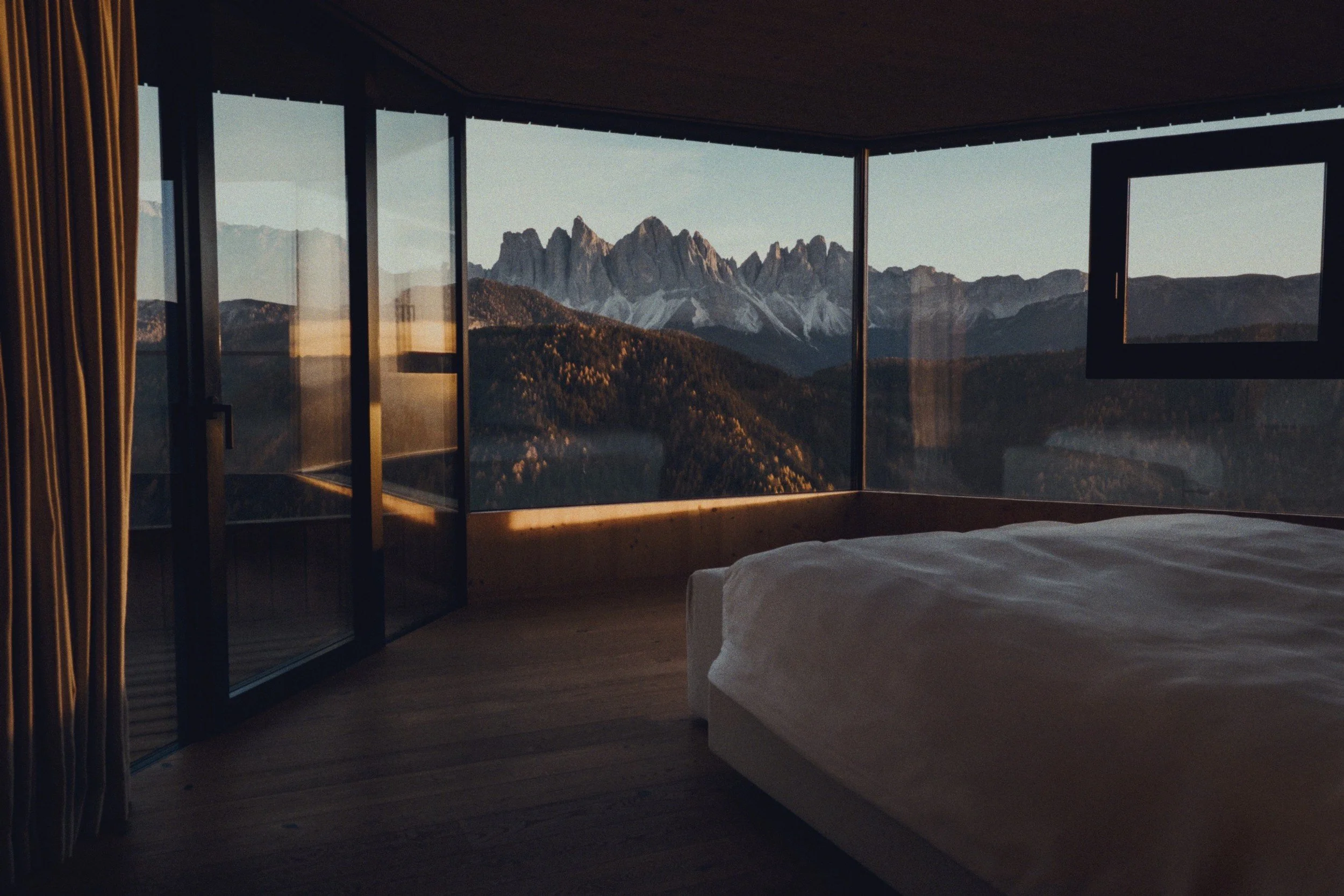
Forestis Dolomites, Italy: late-autumn Celtic Wyda & forest breathwork. This striking eco-luxury sanctuary takes advantage of the crisp, thinning mountain air to put guests through Wyda — an ancient energy and movement practice native to European Celts. Guided by specialized trainers, you practice breath retention and muscular stabilizing postures directly on open-air platforms overlooking the peaks, forcing the body to produce protective proteins and optimize cardiovascular efficiency ahead of winter.
The Alpine sanctuary where ancient Celtic movement meets peak human performance
Perched 1,800 meters above sea level, wrapped in the dense, silent pine forests of South Tyrol, Forestis Dolomites stands as a striking masterclass in eco-luxury minimalism. While most flock to this Italian sanctuary for its floor-to-ceiling mountain vistas and pristine architecture, late autumn unveils the property’s most profound offering: a radical convergence of ancient European mysticism and modern exercise physiology. As the crisp, thinning autumn air settles over the jagged peaks, Forestis invites guests to step onto its open-air wooden platforms to practice Wyda — the traditional energy and movement system of the ancient Celts.
The yoga of the West
Long before Eastern mindfulness practices traversed the globe, the druids and Celts of Europe practiced Wyda to maintain vital energy (Biha) and connect deeply with the natural world. Often described as the “Yoga of the West”, Wyda relies on fluid, focused movements, muscular stabilizing postures, and deep breath retention. At Forestis, this isn’t just historical roleplay; it is a highly calculated physical conditioning program. Guided by specialized movement trainers, guests stand facing the dramatic, snow-dusted peaks of the Dolomites, executing postures designed to anchor the body’s three energy centers: the vital sphere (abdomen), the emotional sphere (chest), and the mental sphere (head).
The science of the “thin air” reset
Practicing Wyda in the late-autumn alpine climate transforms the experience from a mindful stretch into a potent biohacking session. The deliberately chosen environment leverages three distinct physiological triggers:
Hypoxic conditioning: The thinning mountain air forces the respiratory system to work efficiently, optimizing oxygen transport and skyrocketing cardiovascular stamina just before the harsh winter months.
Cold-induced heat shock proteins: Training in the crisp, sub-zero autumn breeze triggers the body to produce protective thermal proteins. This cellular cleanup strengthens the immune system and fortifies the body against seasonal illness.
Vagal nerve stimulation: Combining conscious breath retention with the scent of volatile organic compounds (terpenes) released by the surrounding stone pines creates a profound shift in the nervous system, instantly dropping cortisol levels.
A sanctuary formed by the elements
The architecture of Forestis mirrors the philosophy of the practice itself. Built entirely from local materials — stone pine, glass, dolomite rock, and mountain water — the towers blend seamlessly into the tree line. After an intense session of open-air breathwork, the sanctuary provides the ultimate integration space. Guests can retreat to the spa to experience treatments rooted in Celtic tree medicine, using frequencies and oils derived from larch, fir, spruce, and pine.
As the sun dips behind the pale peaks, painting the autumn sky in strokes of violet and amber, the true luxury of Forestis becomes clear. It is not just the heated indoor-outdoor pool or the Michelin-starred forest cuisine — it is the rare privilege of breathing in the raw, unadulterated essence of the Alps, and leaving stronger than the winter ahead.